Building a Mobile App in 5 Days with AI: A Tool Comparison
| Can AI builders create production-ready native mobile apps from a single prompt? | How do Lovable, Bolt.new, and Replit compare for mobile development? |
|---|---|
| Not quite yet. While they are fantastic for rapid prototyping and MVPs, they currently lack the advanced security, stable dependencies, and architectural planning needed for fully production-ready, store-approved apps. | Lovable only builds web apps (PWAs), not native mobile apps. Bolt.new writes clean native code but struggles with strict token limits and matching specific designs. Replit offers the best visual output and accurate styling, though it occasionally generates redundant code. |
| How do you publish these AI-generated apps to the App Store or Play Store? | What are the biggest risks of relying solely on these tools? |
|---|---|
| Tools that support native builds (like Bolt and Replit) rely on Expo Application Services (EAS). The distribution process is still fairly technical and can be difficult for non-developers to navigate without running into errors. | The main concerns are shipping apps with insufficient data security, creating fragile codebases that break when tweaking fine details, and failing to meet the strict annual compliance updates required by Apple and Google. |
Last year, artificial intelligence agents and vibe coding gained momentum in the software development world. No-code AI builder Lovable became the fastest growing startup in history and many other AI builders have been trying to get their foot in the door. A single prompt now generates full stack applications in a matter of minutes without the need for developers. The quality of the output is improving and the limits extend every day.
Table of Contents
AI prompt-to-app builders took off on web applications, and are now leveling up to mobile. Where AI can leverage camera, GPS, push notifications, sensors and offline functionality to create personal experiences in your pocket. This raises the question: how far is AI builder technology in creating App Store and Play Store ready mobile apps today?
This blog examines three popular builders in the current state of their mobile development capabilities through creating a simple mobile application complementary to a branded conference event. Aside from the earlier mentioned Lovable, Bolt and Replit will be explored due to their appearance in Expo's highlighted AI integrations.
Why Expo?
Expo is a cross platform framework for publishing iOS, Android and web apps out of one code base. Expo is backed by large companies such as Meta, Microsoft, Amazon and Discord, and has been chosen as the default mobile app tech stack by many popular AI app builders.
The Conference App
To explore the current status, a mobile app should be created for the App Vision event in 5 days with AI. Using the following prompt to get started:
“Build a mobile application for attendees of this event. The official event website contains all relevant information: App Trends 2026: APP VISION Konferenz zu App-Entwicklung. Use the same style as the event website.
Always optimize for mobile by ensuringResponsive design for all screen sizesAccessibilitySmooth and simple navigation
Ask me any questions you need in order to fully understand what I want from this app and how I envision it.”
This prompt includes directions to create a mobile application, a website containing styling that should be matched in the app and content that should be reflected in the application.
Lovable
To kick off: Lovable. Only 8 seconds after submitting the prompt, the first findings and follow-up questions were reported back from the agent, with an important note:
”Lovable builds web apps with React, not React Native. I'll create a mobile-optimized web app (PWA-ready) that works beautifully on mobile devices.”
Although this will not be creating the desired store ready app, the questions were answered to see the result of the Progressive Web App (PWA).
In a matter of minutes lovable created a Minimum Viable Product (MVP) that aligns with the styling from the event site. The in browser app was created in React and could be saved and added to the home screen. The app was mostly functional, with extracted static data in the codebase and no API connection. Although it would be possible to continue prompting, and to add connectors such as Supabase, Shopify and Stripe, the app was minimally useful at this point.
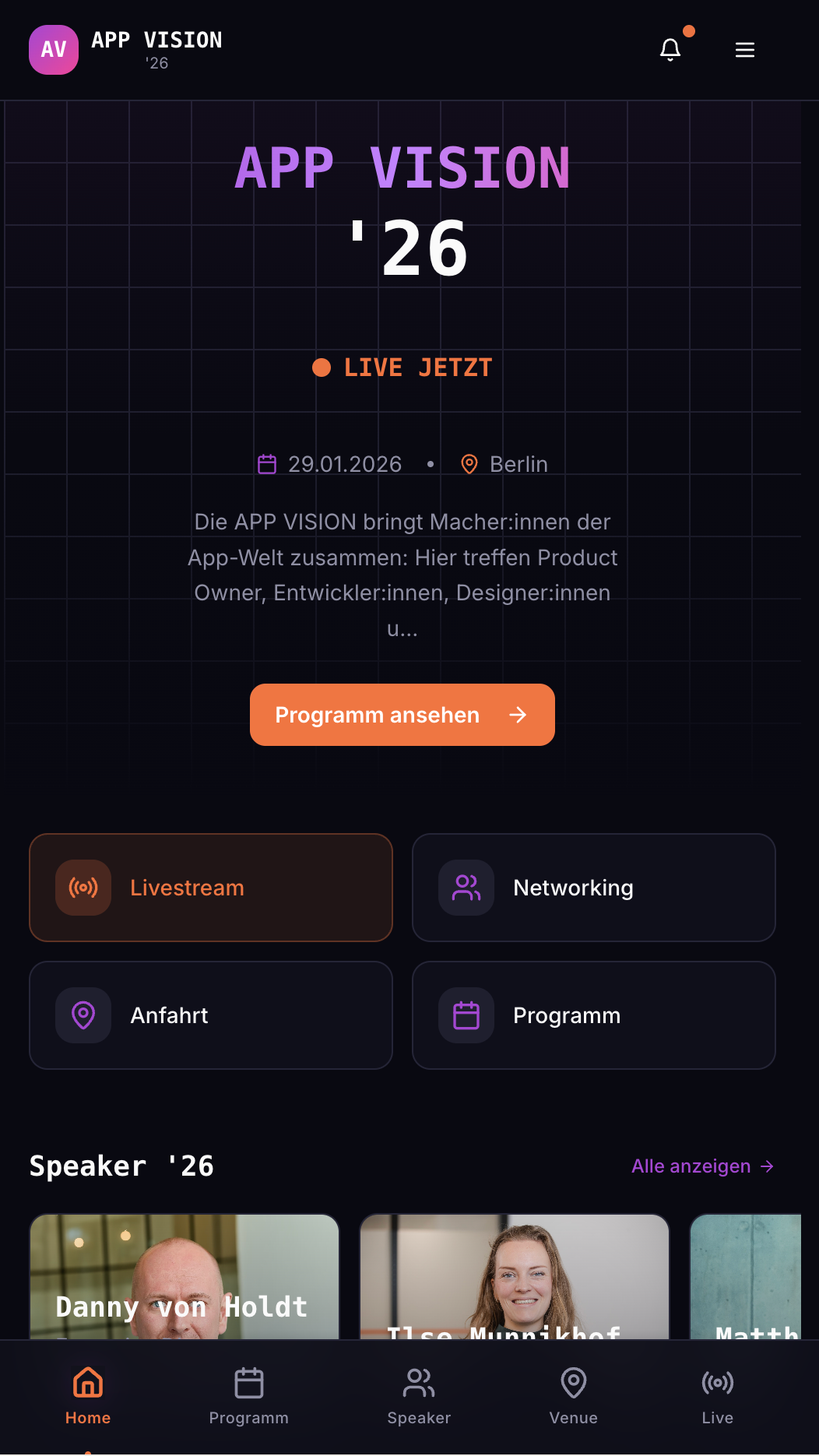
Lovable promptly created a prototype with styling consistent to the event page and solid starting point for a web application. From first glance, the code base generally follows well-established principles and dependencies. It includes a complete set of components from the Radix-ui library. Although generally positive, in our use case this introduces some unused code and redundant third-party dependencies from inactive components.
With Lovable’s recently raised Series B funding to focus on “Deeper integrations, enhanced collaboration and governance & infrastructure to take products from prototype to production” and the vision to “unlock human creativity by enabling anyone to create software” it’s not looking like mobile specific development is currently on the roadmap.
Since Lovable builds web applications, app store distribution is not supported in their service. Users searching for app store presence, are recommended to either use a native wrapper service to or choose a native-first platform with no further distribution guidance.
Bolt.new
Then there is Bolt.new, taking off after turning their online Integrated Development Environment into an online application builder in October 2024. In Feb 2025, Bolt launched an integration with Expo, meaning they support creation of mobile iOS and Android apps.
Like many other AI Builders, Bolt uses a freemium model, where the free tier allows you to use 1M tokens monthly. Token usages and tiers vary significantly in these AI builders. Before committing to a tool, the try-out should be promising. Bolt disappointed by hitting the token limit before rendering any code output. A basic prototype was created, over the course of multiple days because the daily limit kept being hit. While the technical output was solid - a clean code base and direct api implementation, the styling and content were not extracted successfully. The agent seemed to be under the impression that the design was matching the site’s branding.
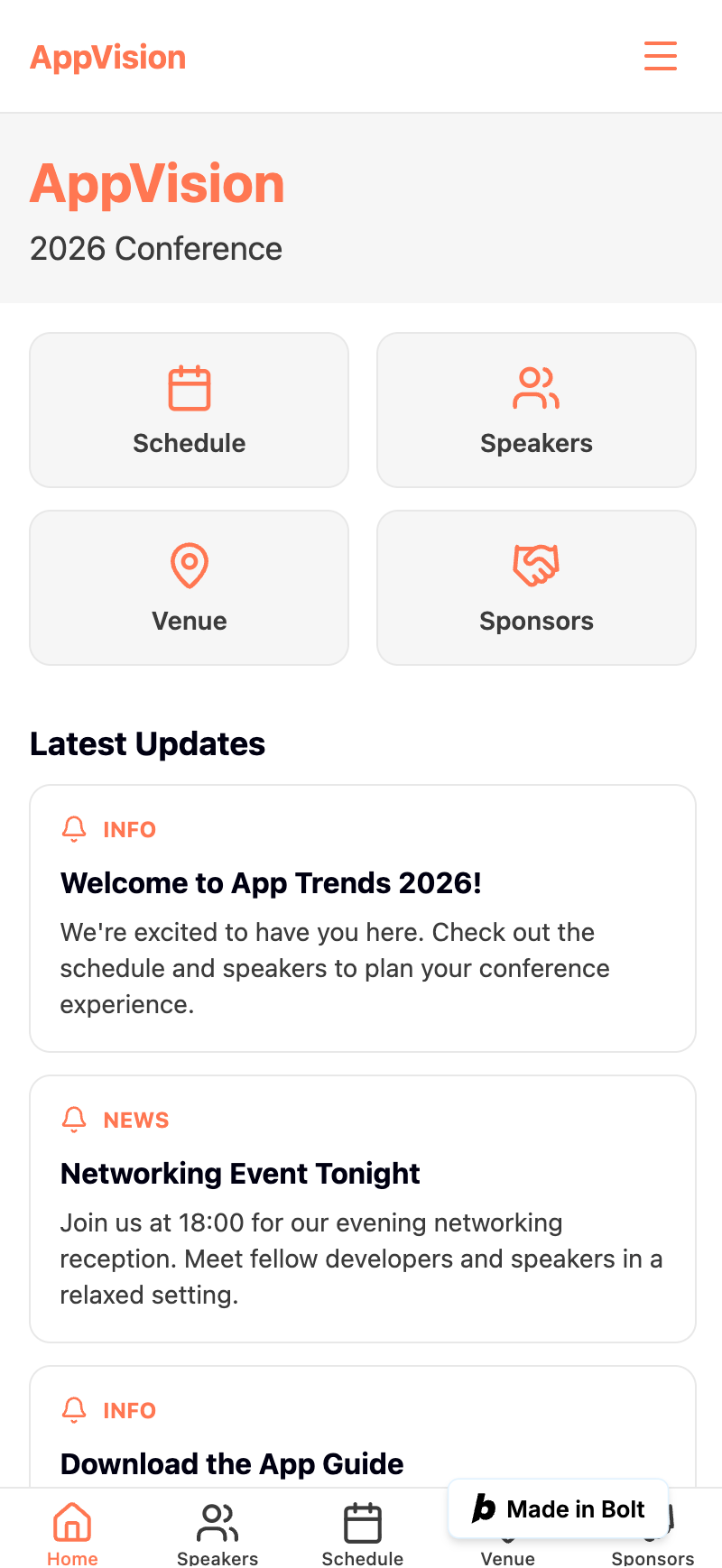
Within the timeframe it was not possible to try out different prompts to see if it would make any design differences, since the 300k daily tokens were used in under a single request two days in a row - 600k tokens down and no output.
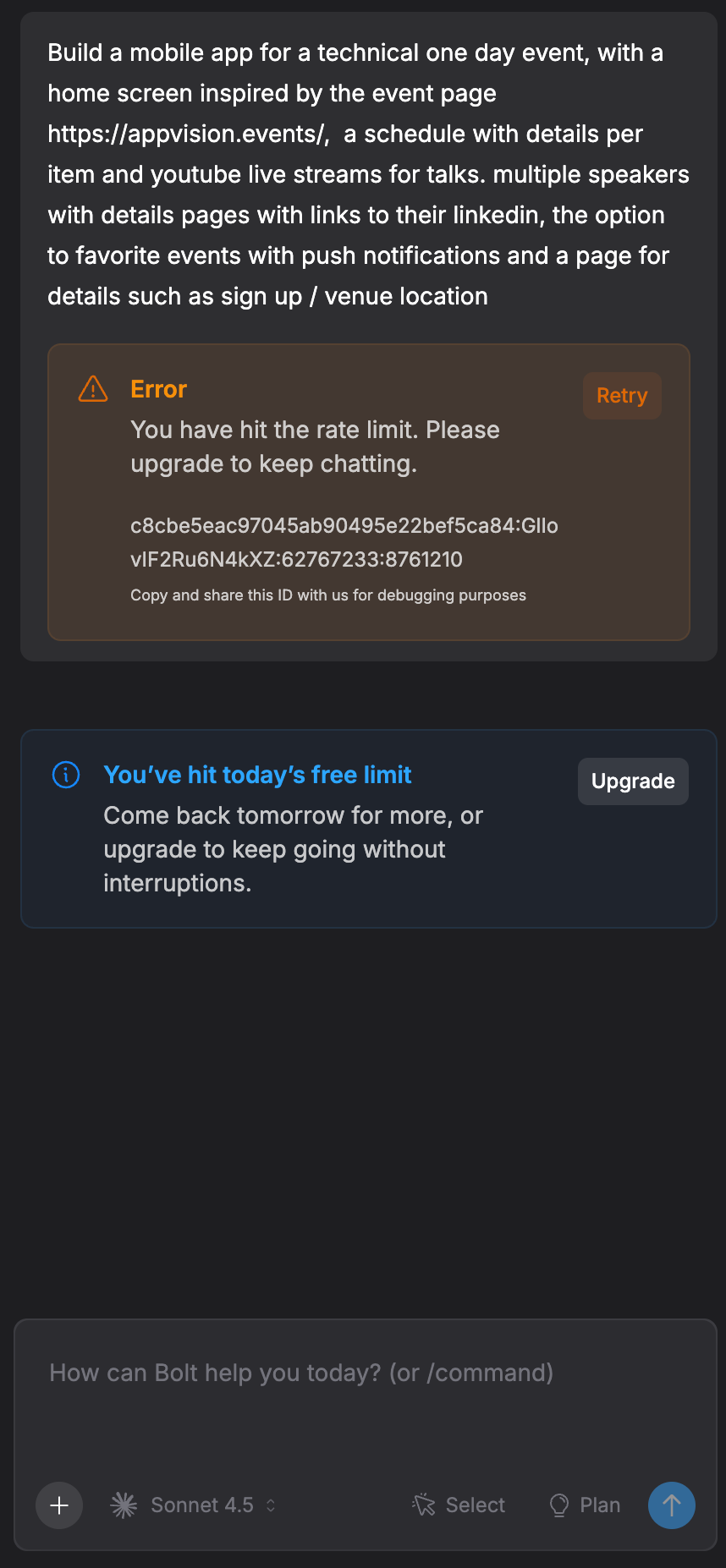
From the Bolt code that was generated after the 5 day period, the results look clean enough for a simple application. With the ability to experience the app hands on on your physical device through Expo Go. The code included static mock content, an initial Supabase (US-based) API integration with minimal boilerplate code and limited third-party dependencies, overall a clean outcome.
Bolt provides documentation on submitting the app to the stores, with an in page AI assistant for additional support. Bolt currently recommends using Expo Application Services (EAS) for publishing. EAS is straightforward for experienced developers but rather technical for users unfamiliar with the CLI, especially when running into errors. Expo and Bolt are working to enable publishing directly from Bolt in the future.
Replit
While writing this blog, Replit introduced mobile app building. Creating a mobile application was previously possible by cloning their mobile project and prompting a re-write. Replit’s web apps were visually appealing, but the initial mobile app that was generated was missing some UI cohesion and brand alignment. The update adds a 'mobile app' toggle below the prompt box on Replit's website, which automatically activates when prompting for mobile.
With the same prompt, the user experience and output have significantly improved.
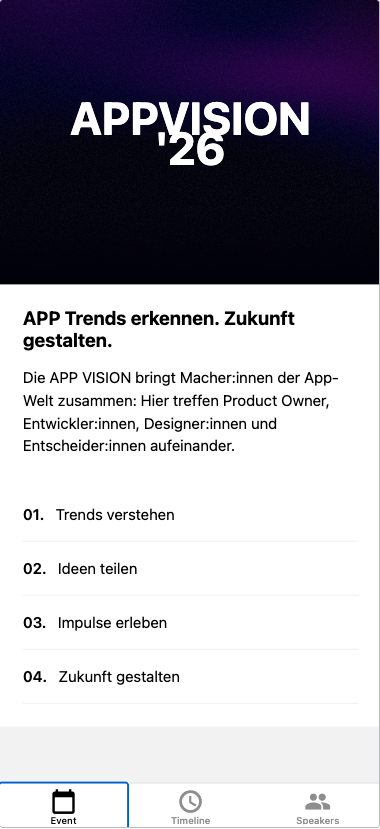
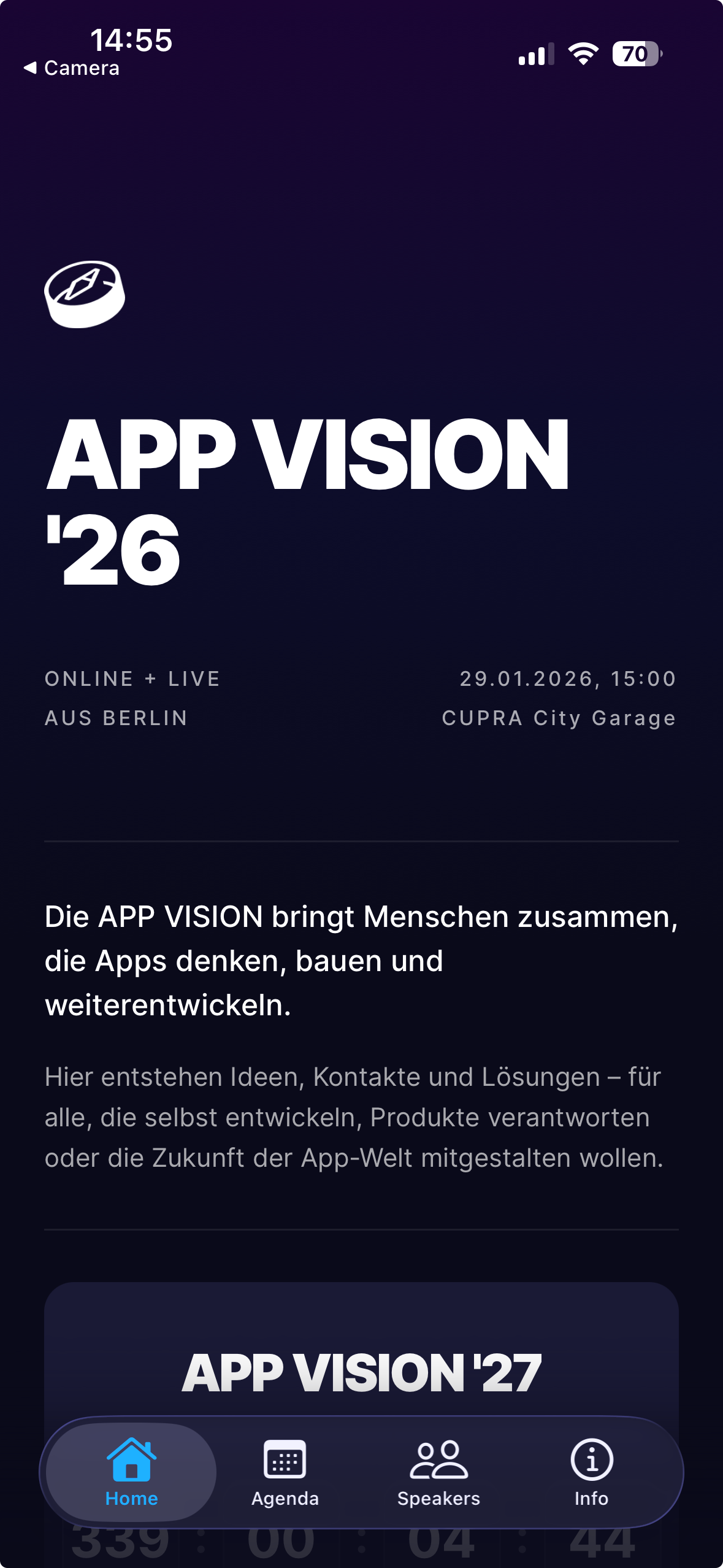
Replit Mobile App Preview January vs February
The builder scraped the selected information from the provided websites quickly and applied the findings accurately. Matching the scraped style in the app and going beyond by even generating an app icon (just not adaptive or liquid glass). Replit allows quick iterations, a clearer token model with more initial output, watching live testing of the web version by the Replit agent, and also allowing immediate on device testing via Expo Go. The initial output is eye candy in my opinion, a high quality working prototype, matching styling and correctly extracted content, supporting even liquid glass, notable as the dependency is not stable yet. However, static content with some redundant extra’s for this use case including non-functional code blocks such as an unused express server, external dependencies, and web support.
The CLI sporadically malfunctioned slightly which increases token usage, but besides this the tools has a predictable token model of about 3 free requests daily. The output aligns with the branding and offers a starting point for a simple yet aesthetically pleasing application that can be cloned and enhanced to a production ready app with minimum effort and maximum reward.
Replit provides app distribution documentation and recommends using EAS as well. The tool enables users to follow the process within the Replit using suggested commands, making it slightly more accessible for less technical users. However, the documentation seems to be outdated and inconsistent with the current user interface as it does not actually show the EAS workflow options.
Comparison
Lovable, does not enable creating and publishing native mobile app applications. It does have a predictable token model, a solid code base and effective content scraping and UI matching capabilities for web applications and PWA's.
Bolt.new allows mobile app generation and offers a clean code base, however, ranks lower in accurately scraping and applying styling and content, and in the overall token experience. The tools might come more to its own in different use cases. App distribution, though being rather technical, is supported through EAS with plans to simplify the process further. The documentation includes an AI assistant.
Replit enables mobile app creation with successful content scraping and styling consistency, in addition to a predictable model. However, it did come with some redundant and unstable code generation and dependencies. App distribution is also done through EAS, however provided inside the Replit user interface with workflow suggestions.
The table below summarizes these (partially subjective) findings, comparing the three tools.
| Lovable | Bolt.new | Replit |
|---|---|---|---|
Mobile Application Coverage | No (only PWA) | Yes | Yes |
Style and Content Consistency |
|
|
|
Token Predictability (Free tier) |
|
|
|
Code Quality |
|
|
|
Dependency minimalism |
|
|
|
Expo Go | No | Yes | Yes |
Store Distribution Support | No | EAS | EAS, slightly less technical approach |
Distribution Simplicity |
|
|
|

Where it’s still lacking
The first security claims about AI built apps are already starting to come in; people are shipping apps without sufficient security measures. Live applications, with real user data, require understanding and acting upon business tradeoffs, owning security, handling complex edge cases, and making architecture decisions. Shipping data processing applications involves responsibilities now neglected when non-developers release AI-built applications.
Besides security, builders are creating unstable builds and breaking existing features in production. Creating an initial application draft with a builder is straightforward, but finalizing details is challenging. AI may include unstable dependencies, undo previously made progress, alter incorrect features, misalign adjustments, or introduce bugs. Without sufficient technical knowledge and understanding in what is happening under the hood, managing this can be difficult. The finer the details, more specific the features and integrations, the harder it is to rely solely on AI.
Another potential challenge of relying entirely on AI builders is future updates and dependence on third-party components. The App and Play Stores update their requirements annually. Apps that fail to meet these requirements may have their updates denied and could eventually be removed from the stores.
Key Lessons from the 5-Day Build
AI has become astonishing in rapidly creating prototypes by scraping content, brainstorming on product decisions and creating boilerplate. Builders create simple applications, bust out new features, fix common bugs and connect APIs or selected integrations. A prototype can be created in minutes, the bar to develop mobile apps has never been this low and these creations could theoretically be shipped to production.
Does this mean it’s time to switch to AI builders? I don’t think so. Vibe coding tools create apps that are already deployed to production, however, the output these tools generate could lack production readiness for many use cases. The first part of the process is quick, but specific customizations and deployment can be challenging. These tools can be used to significantly cut down resources needed to create prototypes, first iterations, MVPs with minimal impact, non-vital internal projects, or as a source of inspiration and ideation. However, they deliver apps that may be insufficiently secure without sufficient precautions and interventions, and future updates may be hinder the growth and risk the functionality of AI-built apps.
Now our prototype can be used to create and ship our event app more quickly - production ready of course!